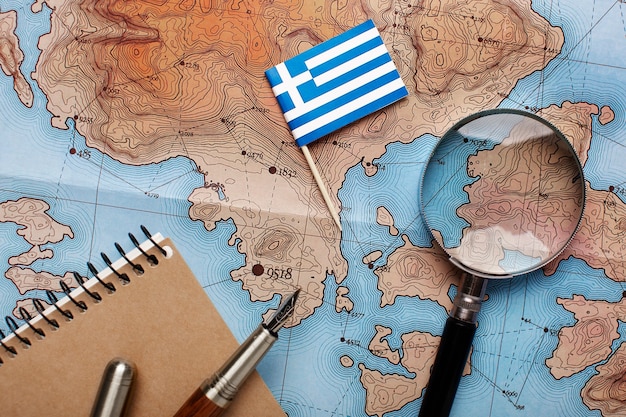
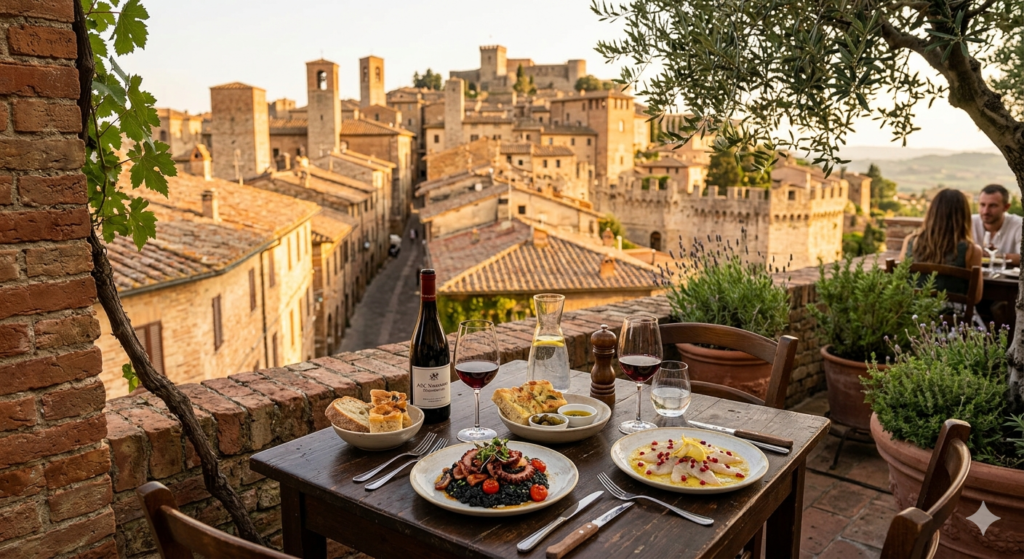
The Mediterranean Sea has for centuries been a place where not only trade routes meet, but also flavors, aromas, and traditions. Here, food is no longer just a way to satisfy hunger, but becomes an important part of social life, a way to express identity, and a form of building relationships between people. In our shared journey through the culinary culture of this region, we will focus mainly on Greek cuisine, but we will also refer to the wider Mediterranean context.

At the very beginning, it is worth noting that food culture in this region has developed over thousands of years. It has been shaped both by natural conditions and by contact between different civilizations. As a result, a cuisine has emerged that is very diverse, yet at the same time coherent – based on similar ingredients and values.

Characteristic ingredients of Greek cuisine

Gemini_Generated_Image_9433g89433g89433

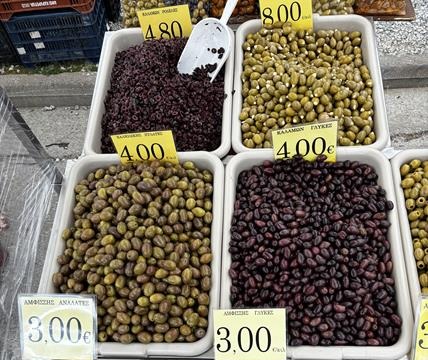
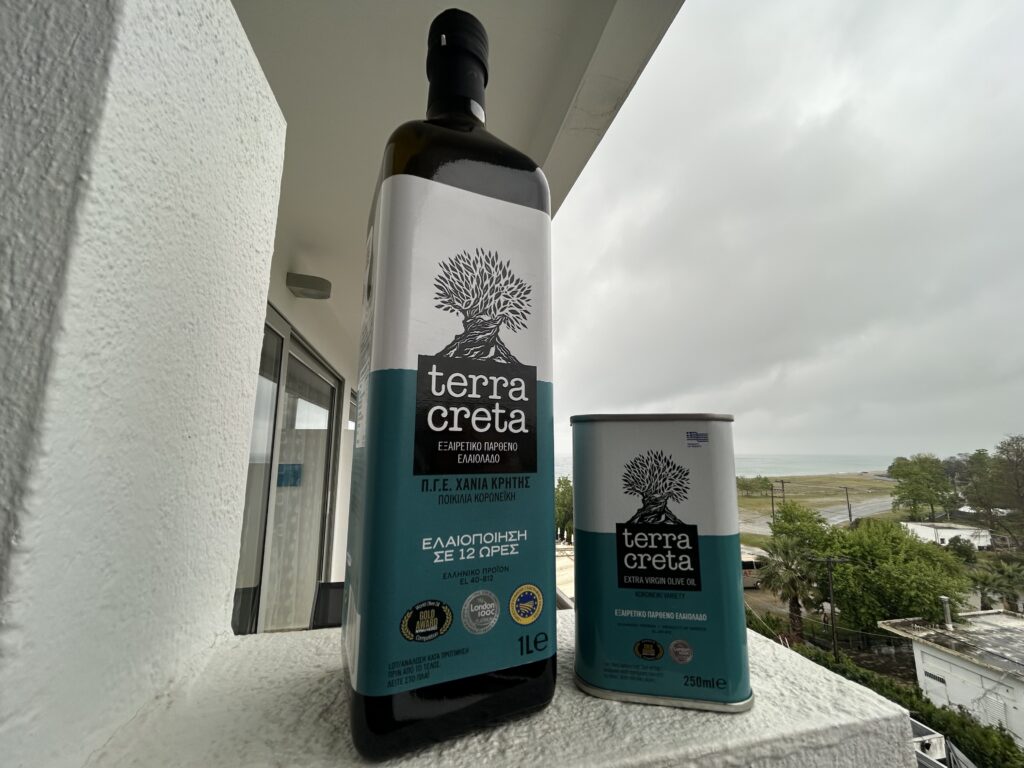
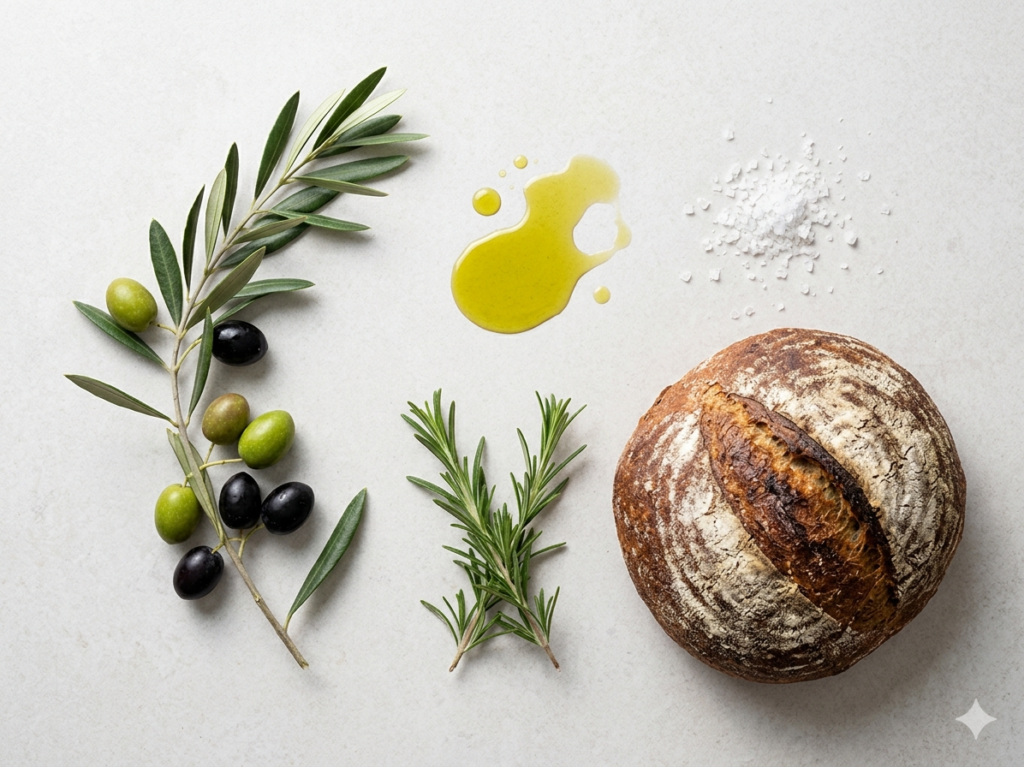
Greek cuisine is known for its simplicity, freshness, and very intense flavors. It is based on locally available ingredients, which are high quality thanks to the favorable climate. One of the most important elements is olive oil – often called “liquid gold.” It is used for almost everything: frying, baking, as a dressing for salads, and even in desserts.

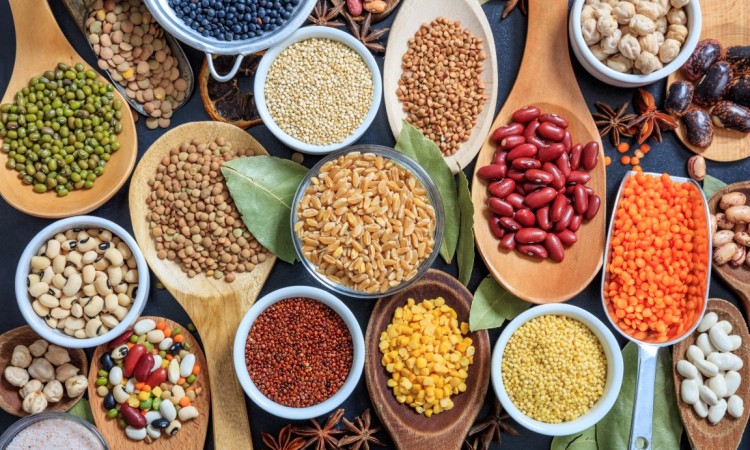
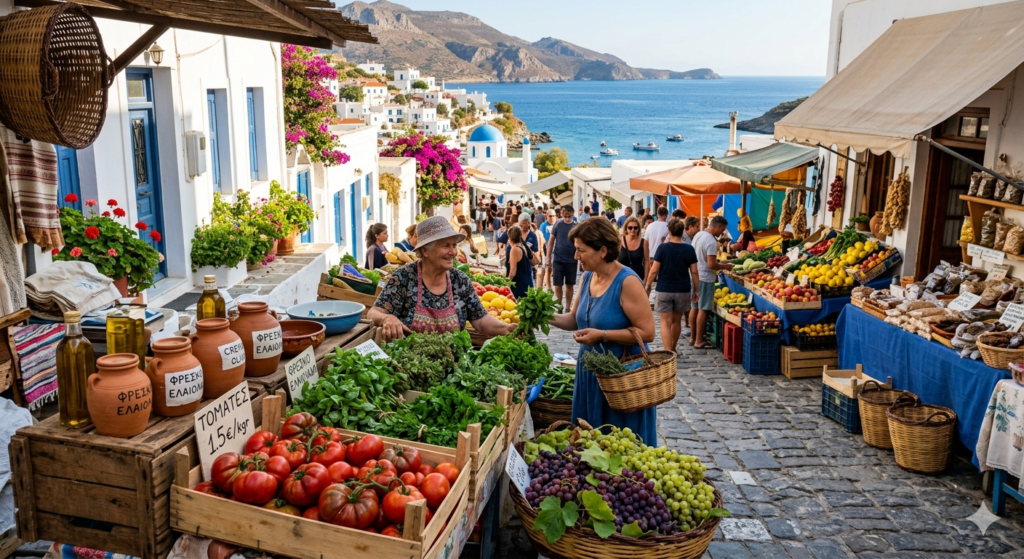
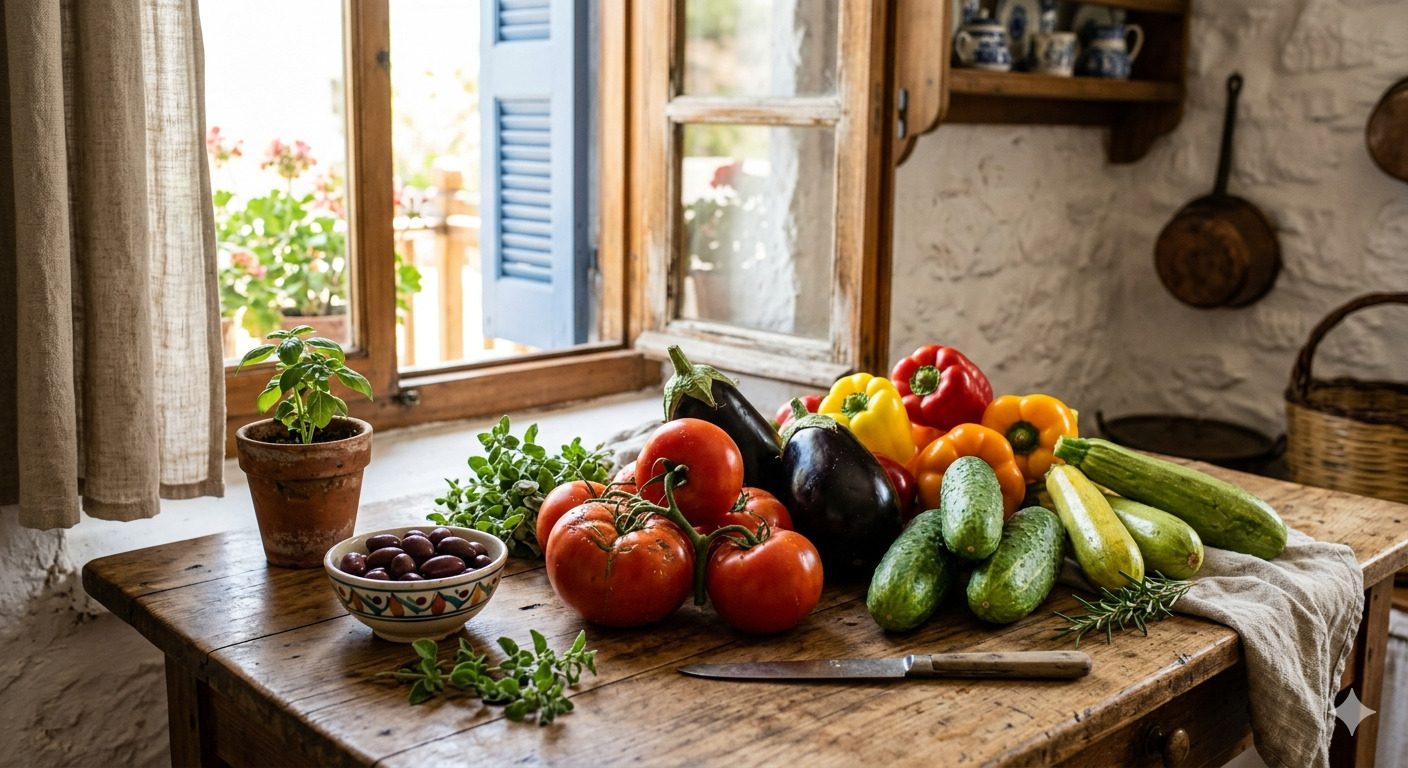
It is impossible to talk about Greek cuisine without mentioning vegetables. Tomatoes, cucumbers, eggplants, zucchini, and peppers appear in almost every meal. They are often served in a very simple way to bring out their natural taste. Legumes are also popular – lentils, chickpeas, and beans, which are the base of many everyday dishes.

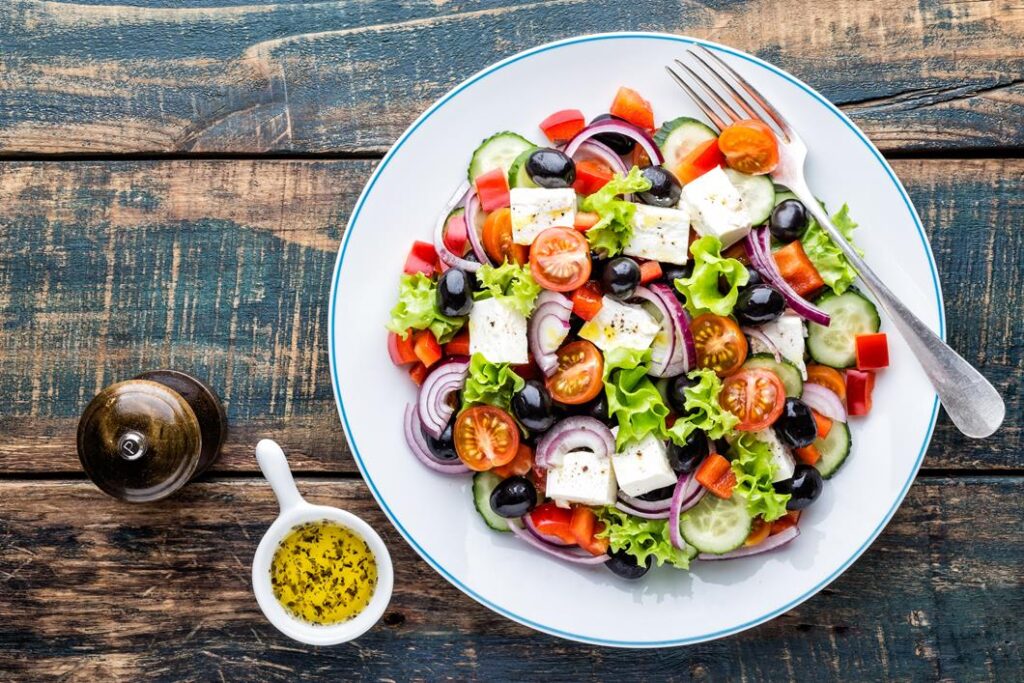
Cheese also plays an important role, especially feta – a salty, white cheese made from sheep’s or goat’s milk. It is used both in salads and main dishes. Greek yogurt should not be forgotten either; it is thick, creamy, and often used in both savory and sweet dishes.

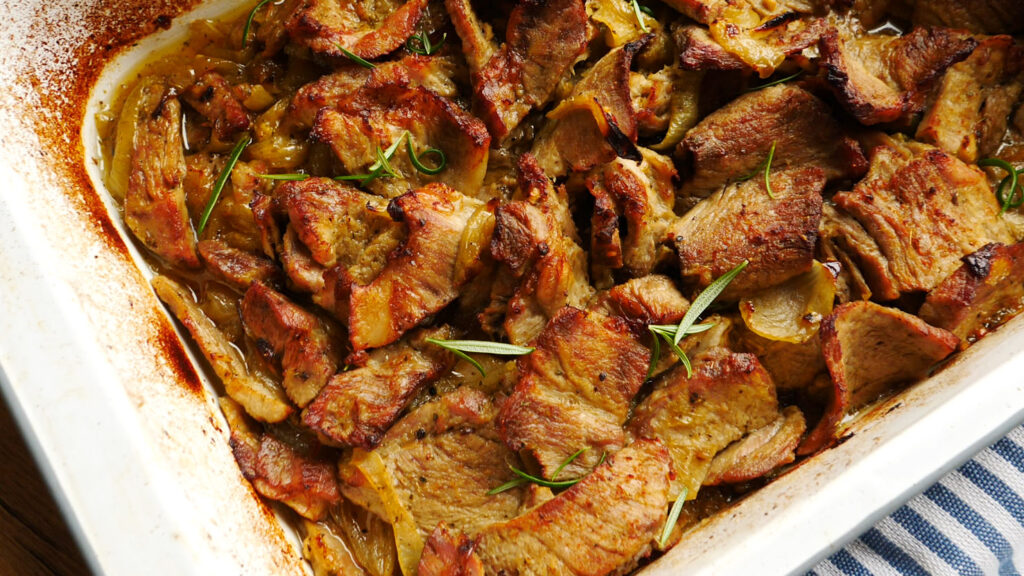
Meat appears in Greek cuisine less often than one might expect. The most commonly eaten are poultry, lamb, and pork. Fish and seafood are also popular, especially in coastal regions. All these ingredients are complemented by aromatic herbs and spices – oregano, thyme, mint, and garlic – which give the dishes their characteristic Mediterranean flavor.

The importance of shared meals in Mediterranean culture

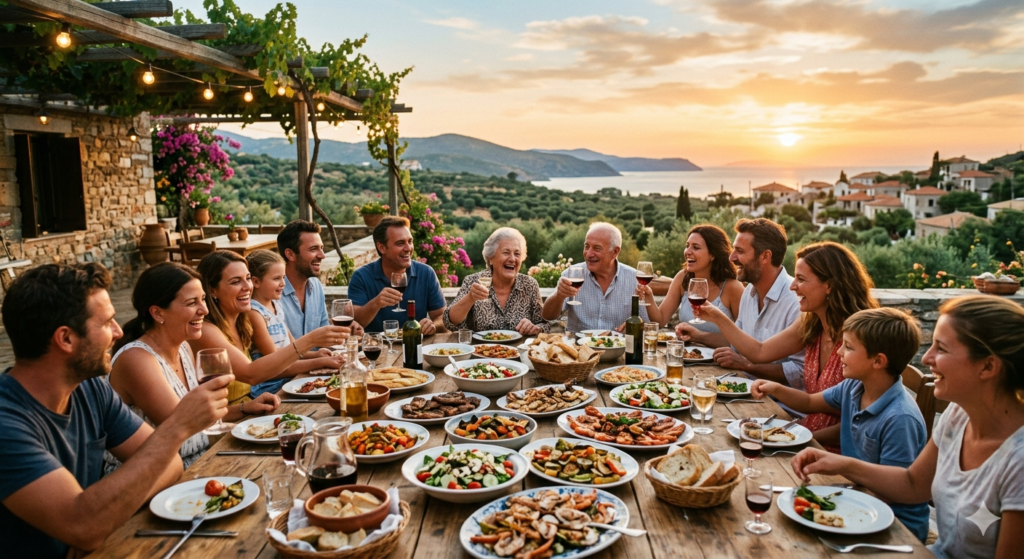
In Mediterranean culture, food is much more than just eating meals. It is a ritual that brings people together and builds relationships. Eating together is a chance to talk, laugh, share experiences, and enjoy everyday life.

In many homes, the day is organized around meals. Lunch or dinner is the time when everyone gathers at the table, no matter how busy they are. This time is not rushed. On the contrary, meals last a long time, allowing people to enjoy both the food and each other’s company.

Hospitality is especially important in this culture. Inviting guests for a meal is not only polite, but almost a duty. Hosts do their best to make guests feel comfortable and well fed. This often means preparing a large amount of food, much more than needed.

A shared meal is also a way of passing on traditions. At the table, younger generations learn recipes, discover the history of their family and region, and develop a connection to their culture.

Differences between everyday and festive cuisine

Everyday cuisine in Greece is simple, healthy, and based on easily available ingredients. Vegetable dishes, soups, one-pot meals, and light foods that can be prepared quickly are very common. Examples include stewed vegetables, salads, and dishes made from legumes.

Seasonality is also important in the daily diet. In summer, light and refreshing meals are popular, while in winter, more filling dishes appear, such as stews and roasted meats.

Festive cuisine, on the other hand, is a real feast. For special occasions, people prepare more time-consuming and richer dishes. These include roasted meats, stuffed vegetables, and a variety of cakes and desserts. Religious holidays, such as Easter and Christmas, are especially important, and traditional dishes passed down from generation to generation are prepared.

Holiday meals are also more symbolic. Each dish has its own meaning and is often connected to specific traditions. Preparing these meals is not only a culinary challenge, but also a way of preserving cultural heritage.

The influence of history and geography on culinary traditions

Greek cuisine, like Mediterranean cuisine in general, has been shaped by history and geographical conditions. Its location by the sea has made fish and seafood an important part of the diet. At the same time, the mountainous terrain limited large-scale farming, which led to the use of local and easily available products.


The history of Greece is also a history of contact with other cultures. Turkish, Italian, and Middle Eastern influences can be seen in many dishes. For example, the use of spices, meat preparation techniques, and sweet desserts have roots in different culinary traditions.

Climate is also an important factor. Warm, sunny summers support the growth of olives, grapes, and vegetables. As a result, the diet is rich in fresh products that do not require complicated preparation.

Economic history also plays a role. Periods of crisis taught people how to use simple ingredients in creative ways. Many traditional dishes were created out of the need to save money and make the most of what was available.

Popular dishes among young people

Modern Greek cuisine, especially among younger generations, combines tradition with modernity. Young people often choose classic dishes, but in slightly changed forms.

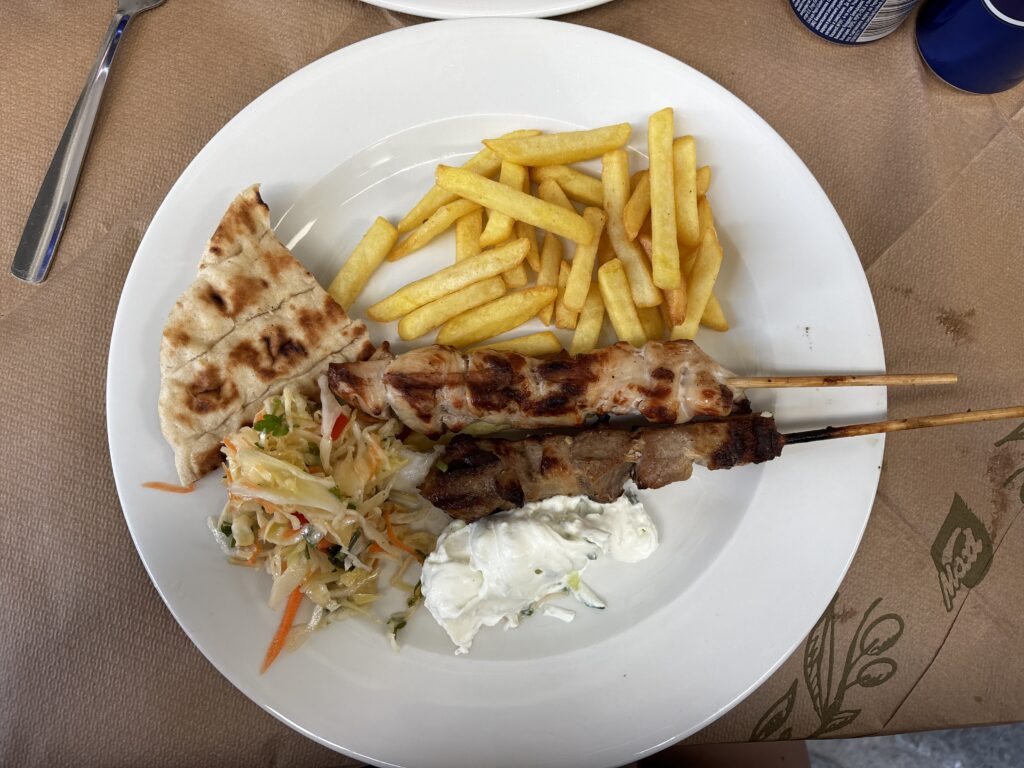
One of the most popular dishes is souvlaki – pieces of meat grilled on a stick, often served with pita, vegetables, and sauce. It is quick, tasty, and convenient, perfect for takeaway.

Gyros is also very popular. It is similar to kebab, but stands out because of its special spices and the addition of fries. It is one of the favorite meals among young people, especially after social gatherings.

Greek salad should not be forgotten either. Despite its simplicity, it is still very popular. It is light, healthy, and fits well with the lifestyle of young people who care about their diet.

More and more modern versions of traditional dishes are also appearing – for example, burgers inspired by Mediterranean flavors or vegan versions of classic meals. Street food is also popular, combining traditional ingredients with a modern way of serving.

Young people are also increasingly interested in healthy eating, which is why Mediterranean cuisine is so popular. It is considered one of the healthiest diets in the world.


A dish that tells a story

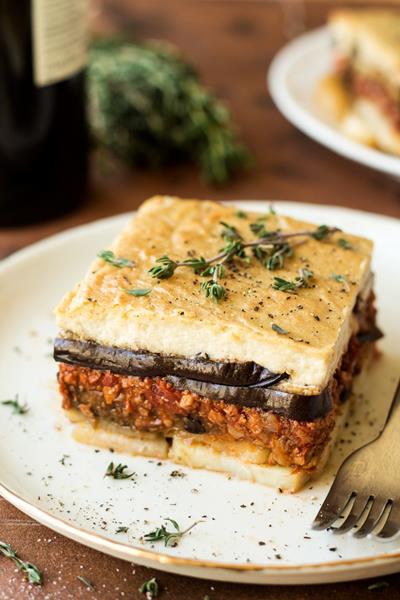
One of the most characteristic dishes of Greek cuisine is moussaka. It perfectly reflects the spirit of this cuisine – simple, but at the same time rich in flavor.

Moussaka consists of several layers. The base is slices of eggplant, which are first fried or baked. Then a layer of minced meat is added, usually lamb or beef, prepared with tomatoes, onions, and spices. The whole dish is covered with béchamel sauce, which gives it a creamy texture.

In some regions, potatoes or zucchini are also added, making the dish even more filling. Every family has its own recipe, which often differs in small details.

The dish is baked in the oven until the top becomes golden and crispy. Moussaka is rich and aromatic, and its preparation requires time and patience. That is why it is often served on special occasions.

This dish shows how Greek cuisine combines different flavors and textures to create a balanced whole. At the same time, it is an example of how tradition can be preserved despite changing times.

Conversations about favorite dishes

One of the most interesting ways to learn about culinary culture is by talking with others. Thanks to this, we can find out which dishes are the most popular, what memories are connected to them, and how food preferences change over time.

These conversations show that food also has an emotional meaning. For many people, favorite dishes are connected with childhood, family, and important moments in life. These memories are what make food something more than just an everyday activity.

The role of food in building identity

Food plays a very important role in building cultural identity. It allows people to express their connection to a certain community and to maintain traditions.

In Greek cuisine, this strong connection to tradition is especially visible. Many dishes are prepared using recipes that are hundreds of years old. At the same time, this cuisine is not closed to change – it evolves with each new generation.

For many people, cooking is also a form of self-expression. Through the choice of ingredients, the way dishes are prepared, and how they are served, people can show their creativity and individuality.

Modern trends in Mediterranean cuisine

Modern Mediterranean cuisine is developing dynamically. Environmental awareness and a healthy lifestyle are becoming more and more important. Many people pay attention to where products come from, their quality, and how they are produced.

Plant-based diets are also becoming popular, and they fit very well into the tradition of Mediterranean cuisine. Vegetables, legumes, and olive oil are their main base, which makes them not only healthy but also tasty.

We should not forget the impact of globalization. Thanks to it, Mediterranean cuisine has gained popularity all over the world, and at the same time it has been enriched with new inspirations.

The importance of local and seasonal products

One of the most important elements of Mediterranean cuisine is the focus on local products and seasonality. In regions such as Greece, great importance is placed on using what nature currently provides. Thanks to this, dishes are not only fresh but also more nutritious.

In spring, young vegetables, fresh herbs, and light dishes appear on the table. In summer, juicy tomatoes, cucumbers, watermelons, and seafood are dominant. Autumn is the time of olive and grape harvest, as well as preparing preserves. In winter, more filling dishes are common, often based on legumes and roasted vegetables.

Seasonality also has an economic and environmental dimension. Using local products supports local farmers and reduces the environmental impact of transport. This approach is becoming more and more appreciated also outside the Mediterranean region.

Bread and its role

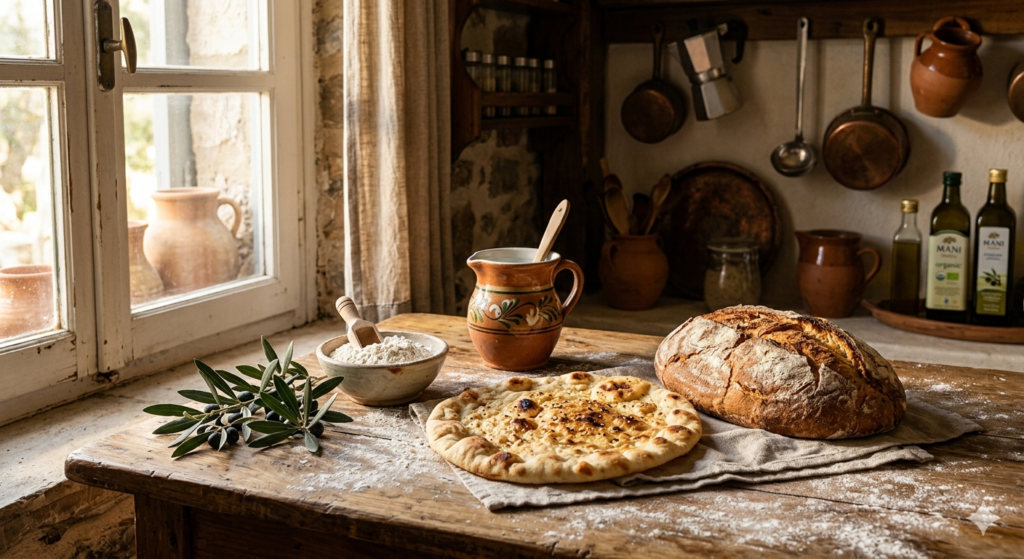
Bread plays a very important role in Greek cuisine and in the whole Mediterranean culture. It is present at almost every meal and is often seen as an essential part of the table. In many homes, bread is not just an addition, but an integral part of the dish.

Traditional bread is made from simple ingredients – flour, water, yeast, and salt. However, its taste and quality depend on the preparation method and the ingredients used. In many regions, you can still find bakeries that bake bread according to old recipes.

Pita is also very popular – a flat bread that is often used as a base for dishes such as souvlaki or gyros. Thanks to its versatility, pita has become one of the most recognizable elements of Greek cuisine.

Bread also has a symbolic meaning. In many traditions, sharing bread represents community, hospitality, and mutual respect.

Desserts and sweet traditions

Mediterranean cuisine is not only about savory dishes, but also a rich tradition of desserts. In Greece, sweets are often made from simple ingredients such as honey, nuts, filo pastry, and yogurt.

One of the most characteristic elements is the use of honey as a natural sweetener. It adds depth of flavor and aroma to desserts. Nuts are also very popular – especially pistachios, almonds, and walnuts.

Desserts often have their place in holiday traditions. They are prepared during important celebrations and are an important part of family gatherings. Interestingly, sweets are often served in small portions, which allows people to enjoy their taste without excess.

Food as part of daily life

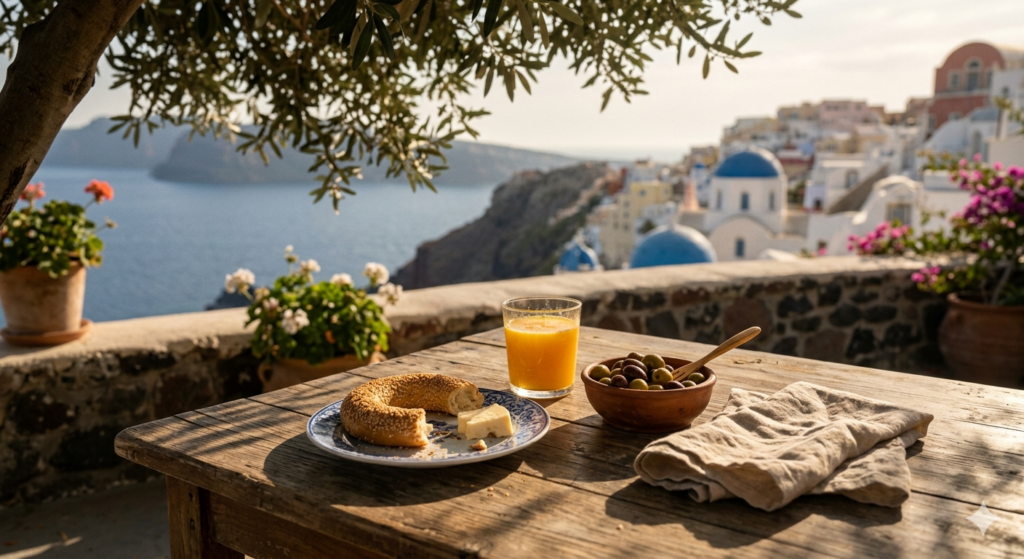
In Mediterranean culture, food is closely connected with the rhythm of the day. Each meal has its own place and meaning. Breakfasts are usually light, while the main meal of the day is lunch or a late dinner. In many regions, a siesta is still practiced – a break during the day that allows people to rest and have a calm meal. This shows how important it is to find time for eating and rest.

Evening meals often last until late hours. It is a time for social meetings, conversations, and relaxation. Food then becomes an excuse to spend time together.

The influence of tourism

In recent years, tourism has significantly influenced the development of Mediterranean cuisine. Many restaurants adapt their menus to tourists’ expectations, which leads to new versions of traditional dishes.

On one hand, this helps popularize Greek cuisine around the world, but on the other hand it also brings the risk of losing authenticity. That is why more and more people try to return to traditional recipes and cooking methods.

Tourism has also contributed to the growth of gastronomy as an important part of the economy. In many places, restaurants are created that combine tradition with modernity, offering high-quality culinary experiences.

Culinary education and tradition

An important aspect of food culture is culinary education. In many families, children learn how to cook from an early age by observing older family members and helping with meal preparation.

This is how recipes, techniques, and values connected with food are passed on. Learning to cook does not take place in a formal way – it is part of everyday life.

Cooking workshops are also becoming more and more popular, allowing people to learn traditional methods of preparing dishes. Thanks to them, it is possible to preserve culinary heritage and pass it on to future generations.

The importance of simplicity

One of the most important features of Mediterranean cuisine is simplicity. The dishes are not complicated, but they are based on high-quality ingredients. It is their natural taste that plays the most important role.

This simplicity is also visible in the way food is prepared. Many dishes require minimal processing, which helps preserve the natural properties of the ingredients. This approach is becoming more and more appreciated in a world where processed foods are dominant.

Food culture as inspiration

The food culture of the Mediterranean region can be an inspiration for many people. It shows how important it is to find time for shared meals, to care about the quality of food, and to enjoy simple things.

Introducing even some of these principles into everyday life can have a positive impact on our health, relationships, and well-being. It is not about completely changing one’s lifestyle, but about a more conscious approach to food.

Summary

Mediterranean cuisine, especially Greek cuisine, is much more than a set of recipes. It is a lifestyle based on simplicity, the quality of ingredients, and the importance of community. Food here is a way to build relationships, celebrate moments, and pass on traditions.

Understanding this cuisine allows us to learn more about the region’s culture, history, and values. Shared meals, seasonal ingredients, and respect for tradition are elements that we can also bring into our everyday lives.

A journey through the flavors of the Mediterranean shows that food can be not only a pleasure, but also a way to discover the world and build connections with others.

Przejdź do polskiej wersji

Leave a Reply

Your email address will not be published. Required fields are marked *

7 − 5 =