
🗣️ Language of Everyday France
Where words shape identity, streets speak, and conversation becomes an art form
France is a country where language is far more than a tool for communication — it is a living monument, a political statement, and a cultural compass all at once. Walk through any French city, from the grand boulevards of Paris to the winding lanes of Lyon or the sun-drenched squares of Marseille, and you will hear, see, and feel the French language everywhere. It spills from café conversations, glows from neon shop signs, echoes across metro platforms, and anchors centuries of national pride.
To understand France, one must first understand how its language permeates every corner of public life and private identity. This blog post explores the many ways French shapes and is shaped by the everyday experience of living in France — from its role as a pillar of national identity to the colorful slang that animates street-corner chatter.
🇫🇷 French as an Element of National Identity
It is impossible to speak about French identity without placing language at its very center. Since the Ordinance of Villers-Cotterêts in 1539 — when King Francis I decreed that French, rather than Latin, would be the language of law and administration — the French language has been a deliberate instrument of unity. Before that decree, the kingdom was a patchwork of regional tongues: Occitan, Breton, Basque, Alsatian, Corsican, and dozens of other dialects and patois. The crown understood what modern sociolinguists would later confirm: a shared language is one of the most powerful forces for forging a shared sense of belonging.
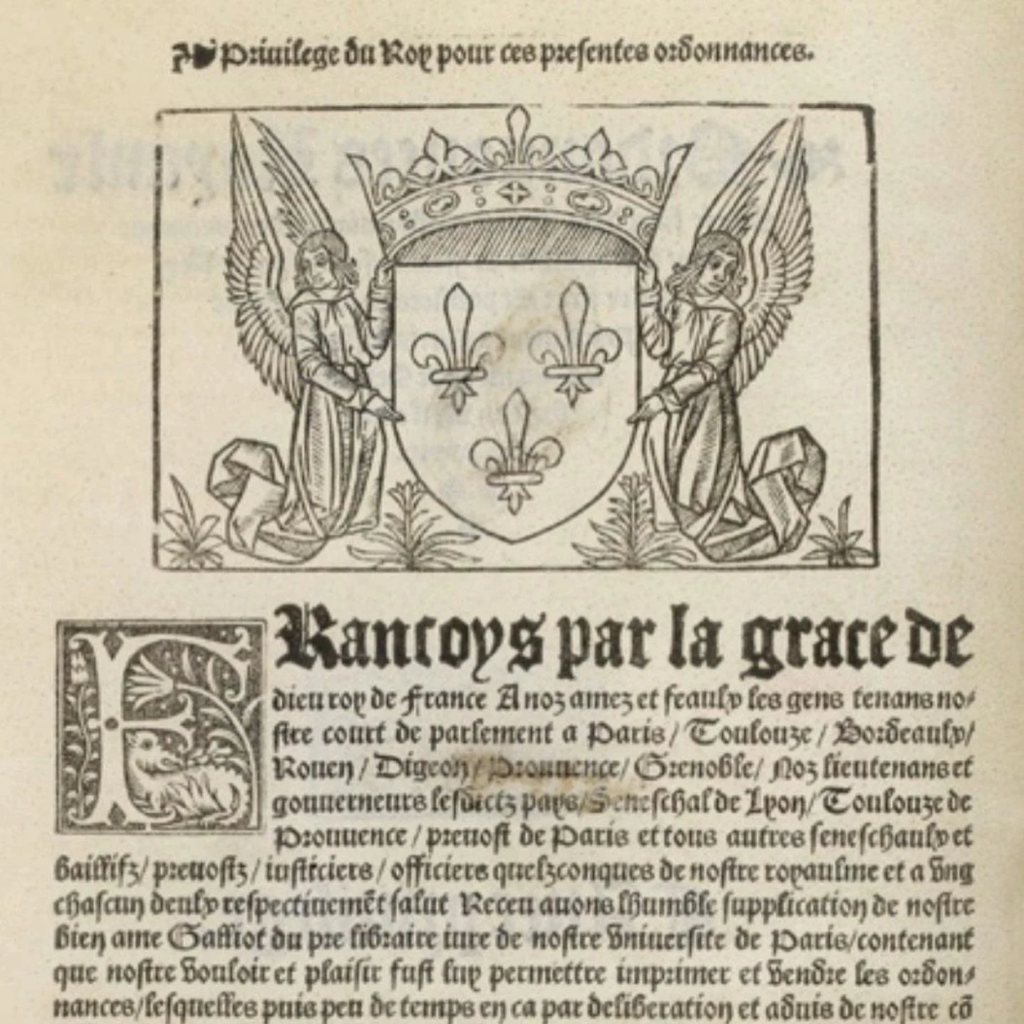
The French Revolution cemented this principle with even greater urgency. In the revolutionary imagination, a citizen who could not speak French was not truly a citizen at all. The Abbé Grégoire’s 1794 report on the necessity of eradicating regional languages and universalizing French was not merely a practical proposal — it was an ideological manifesto. The Republic had one people, one law, and it demanded one language. This conviction has echoed through every subsequent era of French history, from the Third Republic’s school reforms — which sent teachers into rural villages to impose standard French on children who spoke only local dialects — to the contemporary laws that regulate the use of foreign words in advertising and broadcasting.
Today, the Académie française, founded in 1635 by Cardinal Richelieu, continues its centuries-old mission of guarding the purity of the French language. Its forty members, known as “the Immortals,” deliberate over neologisms, reject English borrowings, and propose French alternatives:
- 📧 email → courriel
- 🎙️ podcast → balado
- #️⃣ hashtag → mot-dièse
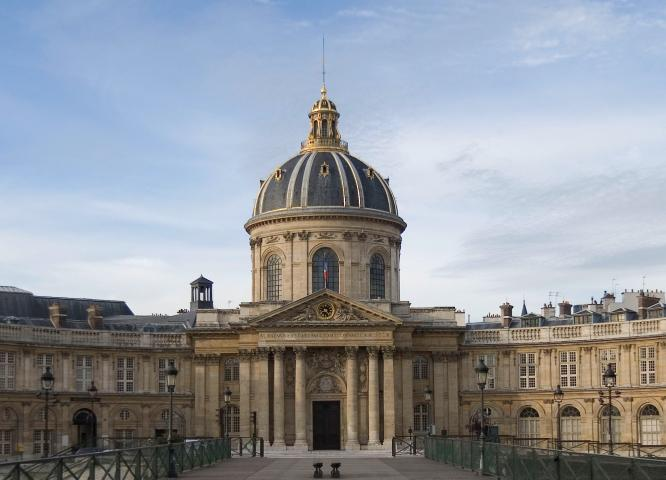
Whether one views the Académie as a noble guardian or a quaint anachronism, its existence testifies to a deeply held French conviction: language is not neutral. It carries values, worldview, and civilization itself.
This conviction is not merely institutional — it is personal. Ask a French person what makes them French, and language will almost certainly appear near the top of the list. The French take pride in the precision, elegance, and clarity of their language. They cherish its literary tradition, from Rabelais and Racine to Camus and Duras. They celebrate its rhetorical culture, where the ability to argue persuasively and articulate ideas with nuance is a mark of education and refinement.
In France, how you speak matters as much as what you say. The language is a badge of belonging, a key to cultural participation, and a thread that connects the individual to a collective narrative stretching back over a thousand years.
Yet this pride is not without tension. In an era of globalization, the dominance of English in technology, business, and popular culture poses a perceived threat to the vitality of French. The Toubon Law of 1994, which mandates the use of French in official government publications, workplace contracts, and commercial advertising, is a direct legislative response to this anxiety. So too is the French government’s vigorous promotion of la Francophonie — the global community of French-speaking nations — as a counterweight to Anglo-American cultural hegemony. For the French, defending the language is not parochialism; it is the defense of a worldview.
🏙️ The Presence of Language in Urban Space
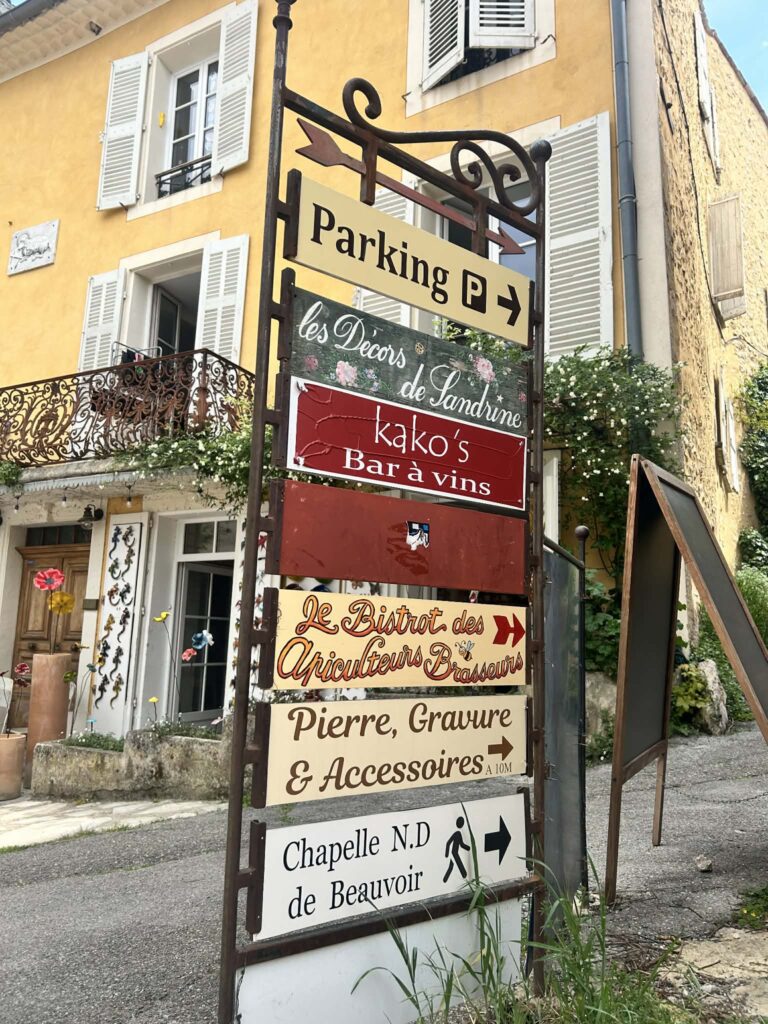
If language is the soul of French identity, the city is its body. In France, language is not confined to books and classrooms — it is inscribed into the very fabric of urban space. Every street corner, every façade, every Métro station is a text to be read. Stroll down any French street and you are surrounded by words: the blue enamel of a street sign, the chalkboard menu outside a bistro, the neon glow of a pharmacy cross, the hand-painted name above a boulangerie. Language in France does not whisper — it announces itself, turning the entire cityscape into a living, breathing lexicon.
🪧 Street Signs as Cultural Memory
Consider the street signs. In Paris, the famous blue-and-white enamel plaques — with their elegant serif typography — do more than identify a location. They tell stories:
| Street Name | What It Recalls |
|---|---|
| Rue de la Huchette | Medieval knife-makers who once worked there |
| Boulevard Saint-Germain | Intellectual ferment of the Left Bank |
| Avenue des Champs-Élysées | Grandeur and spectacle |
Each sign is a small act of cultural memory, anchoring the present in the past and reminding passersby that they walk through layers of history. In provincial towns, the signs often carry both the French name and the local language equivalent — a quiet nod to the regional identities that persist beneath the surface of republican uniformity.
🎨 Advertising, Shop Names & Linguistic Play
French advertising language is a world unto itself, blending wordplay, cultural allusion, and a distinctly Gallic flair for seduction:
- 🌸 A perfume ad promises “l’irrésistible légèreté de l’être” — an unmistakable nod to Milan Kundera
- 🧀 A cheese commercial declares “le goût du vrai” — appealing to an ideal of authenticity
- 🍔 McDonald’s in France invites you to “venez comme vous êtes” — come as you are — echoing republican equality
Shop names, too, are linguistic playgrounds. Boulangeries, pâtisseries, and fromageries announce their wares with a directness that is both practical and poetic. But alongside these traditional names, one finds creative coinages:
- 🍷 Le Vin qui Parle — The Wine That Speaks
- 📚 La Petite Librairie — The Little Bookshop
- ✂️ Coup de Ciseaux — Stroke of Scissors
📢 Public Announcements & the Republican Voice
Public communication — announcements in the Métro, posters for cultural events, municipal notices — also reflects the formal, measured register that characterizes institutional French. The recorded voice on the Paris Métro does not simply say “stand clear”; it intones:
“Mesdames et Messieurs, veuillez ne pas bloquer les portes” — Ladies and Gentlemen, please do not block the doors.
The formality is not accidental. It reflects a republican ideal of public space as a shared, dignified domain where citizens address one another with respect. Even graffiti, that most rebellious of urban texts, often displays a distinctly French rhetorical ambition — political slogans, philosophical fragments, and poetic provocations that would be unusual in other national contexts.
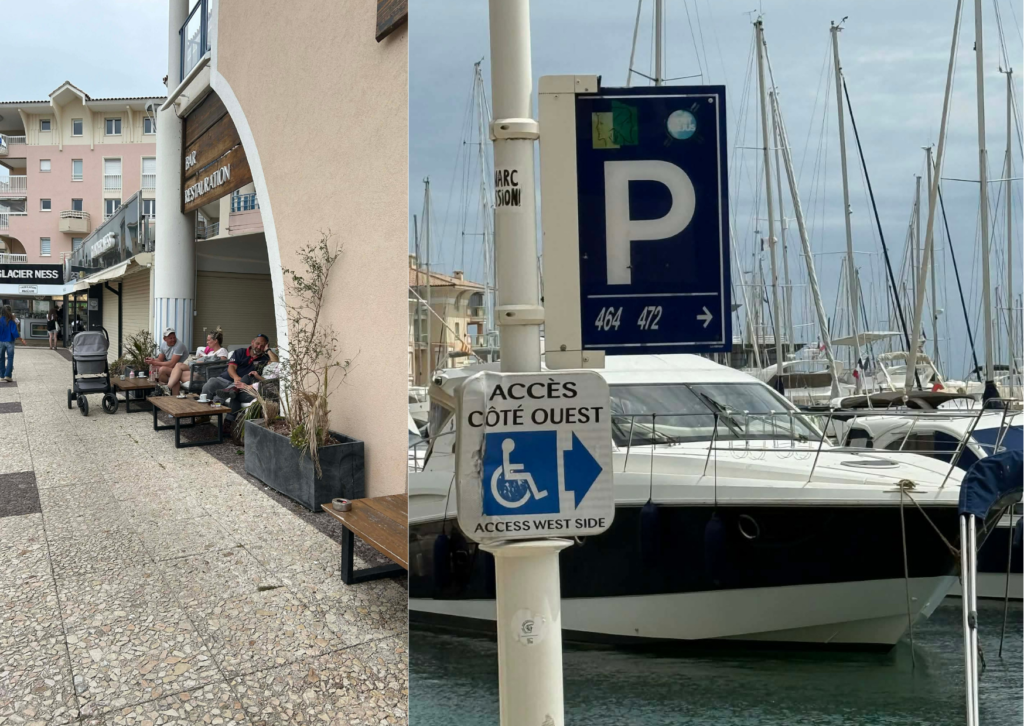
The visual presence of language in French cities also reflects the country’s commitment to linguistic regulation. By law, commercial signage must prioritize French. A foreign brand name may appear, but it must be accompanied by a French explanation. This is why a “fast-food” restaurant will often display a subtitle such as “restauration rapide.” The law does not merely inform — it shapes perception, ensuring that French remains the default lens through which the world is described.
💬 Characteristic Expressions Used in Everyday Conversations
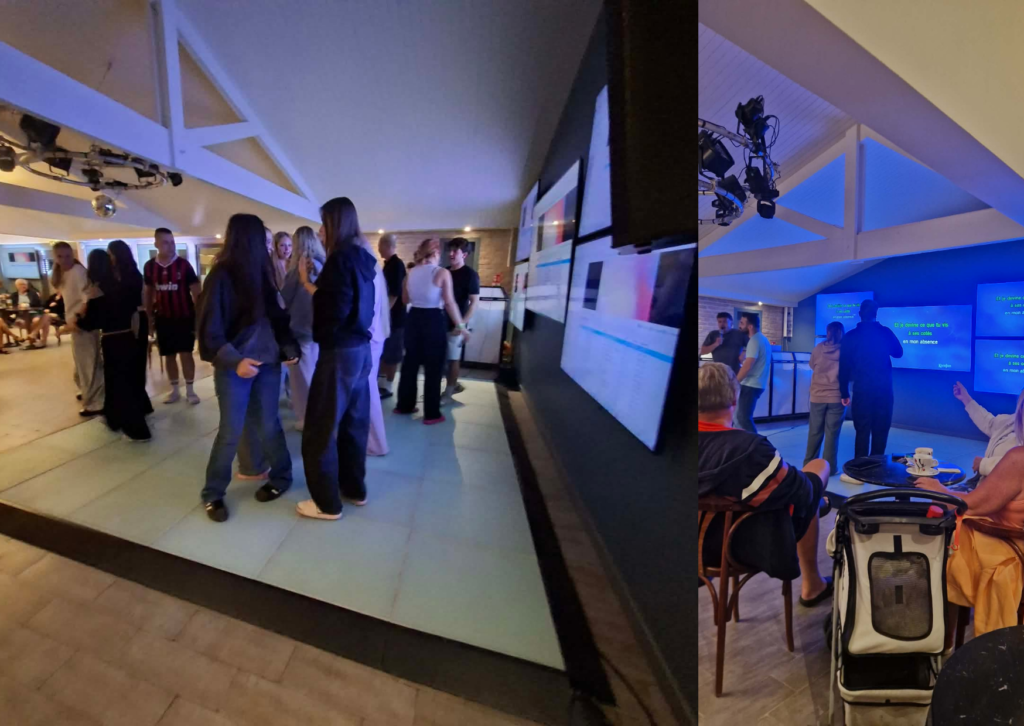
If the formal language of public space represents the French language in its Sunday best, everyday conversation is where it puts on its comfortable clothes and lets its hair down. Spoken French is rich with expressions, idioms, and verbal tics that reveal the humor, warmth, and occasional fatalism of the culture that produces them. Whether it is friends chatting over dinner, colleagues sharing a coffee break, or a group belting out the chorus of a familiar song at a karaoke night, the spoken language reveals a side of French that no textbook can capture — playful, inventive, and deeply social.
🔄 “Ça va?” — The Heartbeat of French Small Talk
Consider the ubiquitous “Ça va?” — perhaps the most versatile phrase in the French language. Literally “it goes,” it serves as both question and answer:
- ❓ “Ça va?” asks “How are you?”
- ✅ “Ça va” replies “I’m fine.”
It is the rhythmic heartbeat of French small talk, exchanged between friends, colleagues, and strangers alike. Its simplicity is deceptive; the tone, the facial expression, and the slight emphasis on one syllable or another can transform it from a casual greeting into a genuine inquiry or a resigned sigh. At a karaoke night, you might hear someone shout “Ça va?” to a friend across the room — and the friend shout it right back, a tiny exchange that says everything and nothing at once, and yet somehow says it perfectly.
🗣️ “Du coup,” Abbreviations & Verlan
Then there is “Du coup,” a filler phrase that has spread like wildfire through contemporary spoken French. Roughly equivalent to “so” or “as a result,” it peppers conversations with such frequency that some linguists have called it the “tic verbal” of the 21st century. A French person telling a story might say “du coup” five or six times in a single minute, using it to connect thoughts, buy time, or simply maintain the rhythm of speech. 🎵
Informal French also delights in abbreviation:
| Full Word | Everyday Short Form | Meaning |
|---|---|---|
| restaurant | restau | restaurant |
| apéritif | apéro | pre-dinner drink |
| faculté | fac | university |
| dormir | dodo | to sleep |
These shortened forms are not slang in the pejorative sense but a natural economy of speech, a way of making language lighter and faster. They are the linguistic equivalent of the French habit of tucking a baguette under one’s arm — practical, effortless, and somehow perfectly French. 🥖
Verlan, the practice of inverting syllables within a word, adds another layer of inventiveness:
- 🔄 femme → meuf (woman)
- 🔄 fou → ouf (crazy)
- 🔄 bizarre → chelou (weird)
Born in the banlieues — the suburban housing projects on the outskirts of major cities — verlan has migrated into mainstream usage, especially among young people. It is a form of linguistic play, a way of creating in-group solidarity, and a subtle act of resistance against the standard language of the establishment. You might hear verlan at a karaoke bar, where a group of friends shouts “C’est ouf!” — “That’s crazy!” — after someone nails a difficult verse. 🎤
🤷 Expressions That Reveal Cultural Attitudes
Other expressions reveal cultural attitudes with striking economy:
- 😌 “C’est pas grave” — it’s not serious / no worries — hints at a philosophical acceptance of life’s small mishaps
- ✅ “Pas de problème” — no problem — though purists insist the correct form is “aucun problème”
- 🤷 “Bof” — a shrug of a word — conveys indifference, mild disagreement, or a distinctly French brand of world-weariness
- 😮 “Oh là là” — far from the cartoonish Anglophone stereotype, a genuine expression of surprise, concern, or commiseration
These are the words that fill the spaces between the lines of formal French — the language of real life, spoken in real time, by real people who are not performing for a grammar exam but simply being themselves.
📚 Differences Between School Language and Informal, Spoken Language
One of the most fascinating aspects of French — and one that often catches learners off guard — is the gap between the language taught in schools and the language spoken on the street. This is not unique to French; every language has its formal and informal registers. But in France, the distance between the two is particularly pronounced, and navigating it is an essential part of achieving true fluency.
Understanding this gap is like understanding the difference between reading about a landscape and actually walking through it — the map and the territory are related, but they are not the same.
🏫 In the Classroom: Reference French
In the classroom, students learn what might be called “reference French” — the standardized, rule-governed variety codified by grammarians and prescribed by the Académie française:
- 📖 They learn the passé simple — a literary tense almost never used in speech
- 📖 They learn full negation: “Je ne sais pas” (I don’t know)
- 📖 They learn all subject pronouns: je, tu, il, elle, nous, vous, ils, elles
- 📖 They learn logical connectors: “en effet,” “cependant,” “néanmoins”
This is the French of the essay, the dissertation, the official letter — a language of structure, logic, and formality that reflects the Cartesian tradition so deeply embedded in French education.
🚶 On the Street: Living French
On the street, much of this disappears:
| School French | Street French | What Changed |
|---|---|---|
| Je ne sais pas | Chépa | “ne” dropped, syllables merged |
| Nous y allons | On y va | “nous” replaced by “on” |
| Il y a | Y’a | contraction |
| Tu es | T’es | contraction |
The spoken language flows like the French countryside itself — not in the straight lines of a planned garden, but in the organic curves of a landscape shaped by centuries of wind, water, and human habitation.
🔀 Vocabulary Divergence
Vocabulary diverges as well. The school teaches one word; the street says another:
| School Teaches | Street Says | Meaning |
|---|---|---|
| automobile / véhicule | bagnole / caisse | car |
| travailler | bosser | to work |
| manger | bouffer / graille | to eat |
| partir | se casser / se barrer | to leave |
These informal synonyms are not merely slang — they are an alternative lexicon that carries social information about the speaker’s age, background, and relationship to the interlocutor. Just as the French landscape varies from the rugged Atlantic coast to the gentle hills of the Loire Valley, the French language varies from the formal precision of the classroom to the colorful spontaneity of the street.
The gap between school French and street French has practical consequences. Foreign students who have studied French for years often arrive in France and find that they cannot understand what people are saying. The language they learned — correct, elegant, and carefully articulated — seems to have been replaced by something faster, messier, and more inventive.
This experience can be disorienting, but it is also an invitation. To learn the spoken language is to enter a deeper layer of French culture, one that is less formal but no less rich, less rule-bound but no less expressive. It is the difference between admiring a landscape from a train window and getting out and walking through it — the view is different when you feel the earth beneath your feet.
Bridging this gap requires exposure, practice, and a willingness to make mistakes. It means listening to French radio, watching French films with French subtitles, and — most importantly — talking to French people in their natural habitat: at the café, at the market, at the dinner table. It means accepting that fluency is not a destination but a journey, and that the road passes through both the formal elegance of the classroom and the vibrant chaos of the street.
📖 Mini Glossary of Basic French Expressions
To close this exploration of the French language in everyday life, here is a short glossary of essential phrases that every visitor — or curious reader — should know. These are the words that open doors, smooth interactions, and signal respect for the language and culture of France.
| French Expression | Meaning in English |
|---|---|
| 👋 Bonjour | Good morning / Good day / Hello — the most fundamental French greeting, used from morning until early evening. Saying “Bonjour” upon entering a shop or greeting a stranger is not optional; it is a social requirement. |
| 🙏 Merci | Thank you — the simplest and most important word of gratitude. Often amplified to “Merci beaucoup” (Thank you very much) or “Merci bien” (Thanks a lot). |
| 😊 S’il vous plaît | Please — the formal form, used with strangers, elders, and in professional settings. Literally “if it pleases you.” |
| 🤗 Salut | Hi / Bye — the informal counterpart to “Bonjour,” used among friends, family, and close colleagues. Casual and warm. |
| 👋 Au revoir | Goodbye — the standard formal farewell. Used in virtually all contexts where “Salut” would be too informal. |
| 😅 Excusez-moi | Excuse me — used to get someone’s attention, apologize for a minor offense, or ask someone to step aside. |
| 😌 De rien | You’re welcome — literally “of nothing.” A modest, understated response to “Merci.” Also heard as “Je vous en prie” in more formal contexts. |
| ☀️ Bonne journée | Have a good day — a polite closing phrase, often exchanged between strangers as a parting gesture. |
| ❓ Comment allez-vous ? | How are you? — the formal version. The informal version is “Comment ça va ?” or simply “Ça va ?” |
| 😬 Pardon | Sorry / Pardon me — softer than “Excusez-moi,” often used when brushing past someone in a crowd or making a minor social error. |
These expressions are more than vocabulary items — they are the small rituals that oil the wheels of French social life. Use them, and you will find that the French respond with warmth and generosity. Forget them, and you may encounter the legendary French coldness that is, more often than not, simply a reaction to perceived rudeness. In France, language is courtesy, and courtesy is the beginning of everything.
The French language is not merely a means of communication — it is a way of being. From the grand declarations of the Académie to the playful slang of the banlieues, from the blue enamel street signs of Paris to the murmured “Ça va?” of a morning greeting, French is alive, evolving, and inseparable from the culture it expresses. To learn it is to enter a world — not just of words, but of thought, feeling, and belonging. 🇫🇷